

An effective information technology budget is no longer a luxury—it’s a necessity for small and medium businesses (SMBs) aiming for growth in the new year. IT investments power everything from operations to customer service, making IT budgeting and planning a vital part of any business strategy.
But how do you ensure your technology spending aligns with your goals? Whether it’s upgrading hardware and software, adopting a new cloud service, or improving networking equipment, the right budget ensures you can allocate funds effectively while maintaining flexibility for the long term.
This guide explores the budgeting importance of IT, offering insights into creating an IT budget that’s not just practical but strategic.
IT Budget Planning: Is It Really Important?
Information technology budget planning ensures you invest in the right tools and services to meet your technology requirements while controlling costs. Without a clear financial plan, it’s easy to overspend on unnecessary upgrades or overlook critical needs like cyber security.
Align Technology with Business Goals
Your IT budget should be more than a list of expenses; it’s a strategic plan that supports your broader goals. Whether you’re aiming to streamline operations, improve service delivery, or enhance customer experiences, every budget item should reflect these objectives. A well-planned budget also helps ensure that resource allocation matches your long-term vision, setting the stage for sustainable growth.
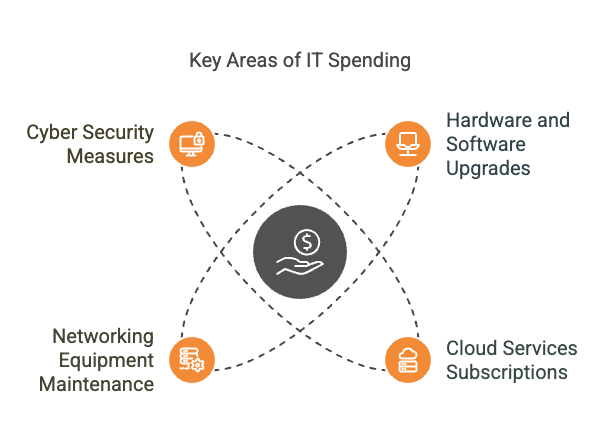
Key Areas of IT Spending:
Common IT investments include:
- Hardware and software upgrades to replace outdated systems.
- Subscriptions to scalable cloud services for real-time collaboration.
- Maintenance and replacement of essential networking equipment.
- Cyber security measures to protect sensitive data and maintain compliance.
Each of these areas requires careful project budgeting to avoid overspending or underfunding critical operations.
Preparing for the Unexpected
An effective IT budget also allows for flexibility. Unplanned expenses—like emergency repairs or scaling up due to rapid growth—can disrupt your financial plan without a reserve. Building contingencies into your budget ensures you’re prepared for unexpected challenges, enabling your business to adapt without compromising service delivery.
Be forewarned: Balancing the IT Budget: The Cost of Cutting Corners
Key Steps to Planning Your IT Budget for 2025
Assess Current IT Infrastructure
Start by evaluating your current IT environment. Review your hardware and software, networking equipment, and cloud services to identify what’s working and what needs an upgrade. An IT audit helps pinpoint gaps in your technology requirements, such as outdated systems or underperforming tools. Use insights from your previous budget to understand spending patterns and identify areas for improvement.
Set Clear, Realistic Business Goals
Your IT budget should reflect your broader business strategy. Are you planning to expand operations, improve customer service, or enhance remote work capabilities? Align your IT spending with these goals to ensure every budget item contributes to your long-term vision. For example, investing in scalable cloud services can support growth while offering cost savings over time.
Prioritise Necessary Investments
Investing in the latest and greatest technology is tempting, but it might not be what your IT environment or team actually needs. Rank your priorities based on urgency and impact. Start with essentials like cyber security, followed by key upgrades to networking equipment or software that enhances productivity. Consider using an information technology budget template to organise and track your expenses, making resource allocation easier and more efficient.
Plan for Hidden Costs
IT budgets often overlook less obvious expenses, such as software licences, training, and ongoing maintenance. These costs can add up, so it’s crucial to include them in your financial plan. Partnering with consulting services can help you identify and plan for these hidden costs.
Work in market research? Check out these valuable insights: 7 Best Market Research Tools Shaping the Industry in 2025
Common Budgeting Mistakes to Avoid
Overlooking Cyber Security
Many SMBs fail to allocate sufficient funds for strong, reliable security solutions, leaving them vulnerable to costly data breaches. Ensure your IT budget prioritises cyber security investments, from next-gen firewalls to employee cyber awareness training.
Underestimating Cloud Service Costs
While cloud services offer scalability and flexibility, their costs can quickly spiral if not managed properly. Businesses often miscalculate subscription fees or ignore the need for storage upgrades. Monitor usage and build these expenses into your budgeting and planning to avoid surprises.
Skipping Employee Upskilling
Introducing new tools without proper training leads to inefficiencies and wasted resources. Include training sessions in your budget to ensure your team can maximise the value of your tech investments.
Ignoring Regular Maintenance
IT systems require consistent upkeep to perform at their best. Neglecting routine maintenance can lead to costly downtime or emergency repairs. Make sure your budget item list includes provisions for regular updates, hardware replacements, and proactive support.
Invest Strategically: Outsourcing to MSPs
Partnering with a Managed Service Provider (MSP) can significantly streamline your IT budgeting and planning process. An MSP provides expert guidance on resource allocation, ensuring your IT environment aligns with your business strategy and technology needs.
How MSPs Add Value to IT Budgeting
- Strategic Planning: MSPs help develop a clear financial plan that aligns your IT investments with long-term business goals.
- Cost Savings: By identifying cost-effective solutions, such as optimising cloud service usage or consolidating software licences, MSPs reduce unnecessary expenses.
- Real-Time Monitoring: Many MSPs offer tools to track your IT performance and spending in real time, allowing for quick adjustments.
- Comprehensive Support: From routine maintenance to unexpected repairs, MSPs cover essential service delivery tasks, helping you avoid costly downtime.
Find out more: The ROI of Managed IT Services for Businesses
Take the Stress Out of IT Budget Planning with Expert Guidance
By approaching your IT budgeting strategically and carefully, you’ll lay the foundation for smarter, more sustainable growth.
Platform 24’s tailored IT consulting services can optimise your IT spending, deliver cost savings, and ensure your technology investments align with your long-term goals. Reach out to us for a free consultation, and let’s build a smarter IT budget together!