



Small and medium-sized businesses (SMBs) are frequent targets of cyberattacks, but many assume their existing security practices are enough to keep them safe. Without a thorough cyber security audit, however, gaps in security controls, outdated policies, and unprotected sensitive data can go unnoticed – until it’s too late.
A cyber security audit helps businesses identify vulnerabilities, assess their security posture, and ensure compliance with industry standards. So how often do you need to conduct an audit, and what exactly needs to be included?
Let’s break this subject down into manageable components so you can assess the importance for yourself.
What is a Cyber Security Audit?
A detailed risk assessment of a business’s security controls, policies, and infrastructure evaluates how well an organisation protects its data, systems, and operations from cyber threats. Unlike general IT maintenance, auditing in cyber security follows a structured process.
The audit scope varies depending on business size, industry, and regulatory requirements. Some audits focus on compliance, while others take a broader approach to security risk management. Engaging professional services ensures a thorough review, with expert insights into improving security posture and reducing audit cost over time.
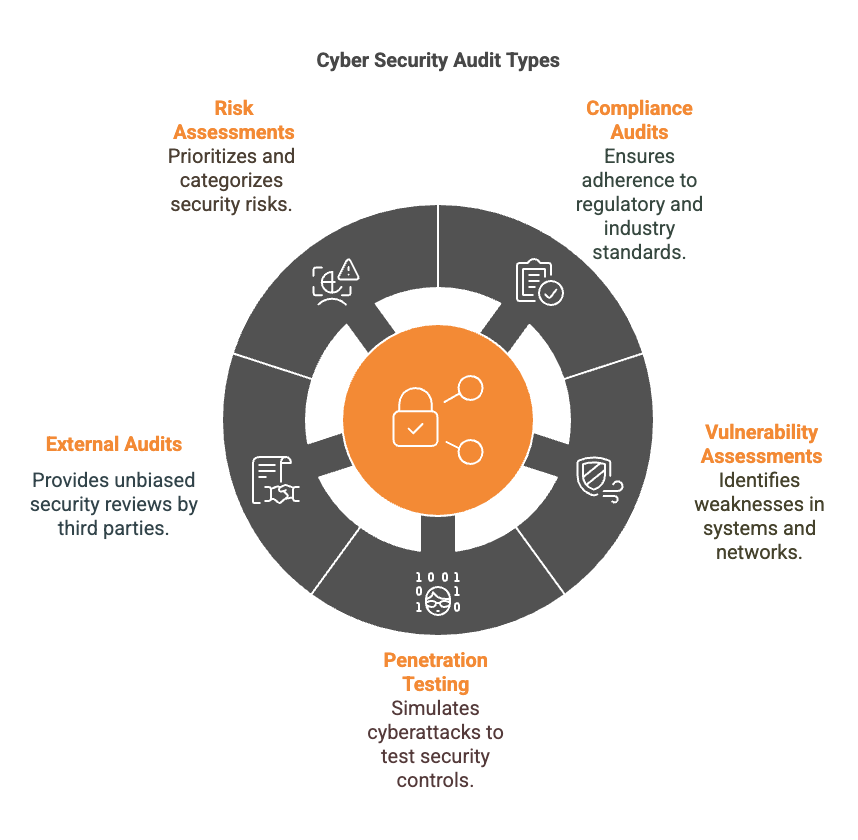
Types of cyber security audits:
- Compliance Audits: Typically required for businesses handling sensitive customer data; ensures the business meets regulatory and industry standards.
- Vulnerability Assessments: Identifies weaknesses in networks, applications, and systems. Uses automated security audit tools to scan for common vulnerabilities.
- Penetration Testing: A simulated cyberattack to test how well security controls withstand real-world threats.
- External Audits: Conducted by third-party security audit services to provide an unbiased security review. Often required by business partners, regulators, or stakeholders.
- Risk Assessments: Focuses on identifying, categorising, and prioritising security risks. Helps businesses develop a risk management strategy tailored to their needs.
Key Areas Covered in a Cyber Security Audit
1. Network Security
Security audit tools are used to evaluate firewalls, antivirus software, intrusion detection systems, and network configurations. The goal is to ensure strong security controls are in place to prevent unauthorised access and data breaches.
2. Access Controls and User Permissions
A critical part of risk assessment is reviewing who has access to sensitive data and business-critical applications. Poorly managed access permissions increase security risks, making businesses vulnerable to insider threats and external attacks.
3. Data Protection
Keeping information secure requires more than just passwords. Audits examine encryption methods, backup procedures, and data storage security to ensure compliance with industry standards.
4. Employee Awareness and Security Best Practices
Even the most advanced security systems can be undermined by human error. Audits assess employee training, password policies, and adherence to security best practices to reduce the risk of phishing attacks and social engineering threats.
5. Incident Response Plans and Business Continuity
An effective cyber security strategy includes preparing for worst-case scenarios. Audits review incident response plans to ensure businesses can detect, contain, and recover from cyber threats quickly. A strong business continuity plan minimises downtime and financial losses.
6. Physical Security Measures
Cyber security isn’t just digital; physical security is equally important. Audits check server room access, security cameras, and on-site data protection measures to prevent unauthorised physical access to critical IT infrastructure.
Learn more: Data Breach Response: A Guide for SMBs
Why SMBs Need to Conduct Cyber Security Audits
For large corporations with dedicated security teams, regular audits are standard practice. But for SMBs, cyber security audits are often overlooked – until a cyber threat exposes security gaps. The reality is that no business is too small to be targeted, and the consequences of ignoring security risks can be severe.
1. Prevent Data Breaches
A single data breach can result in financial losses, reputational damage, and legal consequences. An audit helps identify vulnerabilities before attackers can exploit them, reducing the risk of financial and operational disruption.
2. Comply with Industry Standards
Many industries have strict security and privacy regulations. A security audit ensures businesses meet compliance requirements, avoiding penalties and maintaining customer trust.
3. Protect Sensitive Data and Customer Trust
Customers expect businesses to keep their personal and financial information secure. Regular audits help SMBs demonstrate and enhance their commitment to protecting private data, which can strengthen customer confidence and business reputation.
4. Reduce Long-Term Security Costs
Neglecting security risks can lead to expensive emergency fixes and potential legal liabilities. Routine audits allow businesses to address issues early, preventing costly security breaches and reducing overall audit cost in the long run.
5. Strengthen Security Posture
A cyber security audit provides a clear picture of an organisation’s security strengths and weaknesses. By identifying gaps in security practices, businesses can take proactive steps to improve their defences.
Learn more: Trends in Proactive Threat Monitoring and Response [2025]
How Often Should SMBs Conduct a Cyber Security Audit?
The frequency of auditing in cyber security depends on several factors, including industry regulations, the sensitivity of the data being handled, and overall security posture. While large enterprises often have dedicated security teams conducting ongoing assessments, SMBs must determine a schedule that balances security risks with operational efficiency.
General recommendations:
- At least once per year: A full audit ensures security controls remain effective and compliant with industry standards.
- After major IT changes: If a business adopts new software, expands cloud services, or undergoes a merger, an audit helps ensure new systems don’t introduce security vulnerabilities.
- Following a cyber incident: If a data breach or attempted attack occurs, a security audit should be conducted immediately to identify vulnerabilities and strengthen defences.
- To meet compliance requirements: Some industries require businesses to undergo regular audits to maintain compliance with data protection laws and security frameworks.
Learn more: IT Budget Planning for 2025: Tips and Considerations
Cyber Security Audit Checklist: What You Need to Assess
A cyber security audit should follow a structured approach to ensure no critical areas are overlooked. Here’s a checklist covering essential elements to review:
1. Security Policies and Documentation
- Review existing cyber security policies and procedures.
- Ensure security practices align with industry standards and compliance requirements.
- Assess the effectiveness of risk management strategies.
2. Access Controls and Authentication
- Verify user access permissions and role-based access controls (RBAC).
- Ensure multi-factor authentication (MFA) is implemented where necessary.
- Check for outdated or inactive user accounts that should be removed.
- Implement employee offboarding policies.
3. Network and Infrastructure
- Review firewall configurations and intrusion detection systems (IDS).
- Assess encryption protocols for data transmission and storage.
- Identify open ports and other potential network vulnerabilities.
4. Endpoints and Devices
- Ensure all company devices (computers, mobile devices, IoT) have updated security software.
- Confirm endpoint detection and response (EDR) solutions are in place.
- Implement Bring Your Own Device (BYOD) and work-from-home policies.
5. Data Protection and Backup
- Verify that sensitive data is encrypted and securely stored.
- Ensure all data is regularly backed up.
- Test the effectiveness of recovery plans.
- Ensure proper disposal methods for outdated data and hardware.
6. Incident Response and Business Continuity
- Review, test, and update the incident response plan.
- Assess the business continuity plan for disaster recovery.
- Ensure employees know their roles in the event of a cyber incident.
7. Compliance and Regulatory Requirements
- Confirm adherence to relevant data privacy laws.
- Conduct a compliance gap analysis to identify potential legal risks.
- Ensure documentation is in place for audit and compliance purposes.
Next Steps: Audit Your IT Systems and Take Action Against Risks Before It’s Too Late
By reviewing security risks across information systems, access controls, and even physical security, audits provide a clear picture of how well an organisation is protected. However, they require in-depth knowledge and certain skills that some SMBs may lack.
At Platform 24, our cyber security audits are conducted by a team of experts with specialised security audit tools, and a deep understanding of cyber threats. We can ensure a thorough evaluation of your IT infrastructure, access controls, security practices, and more, to strengthen your overall security posture. Reach out to us for an audit of your IT environment.